
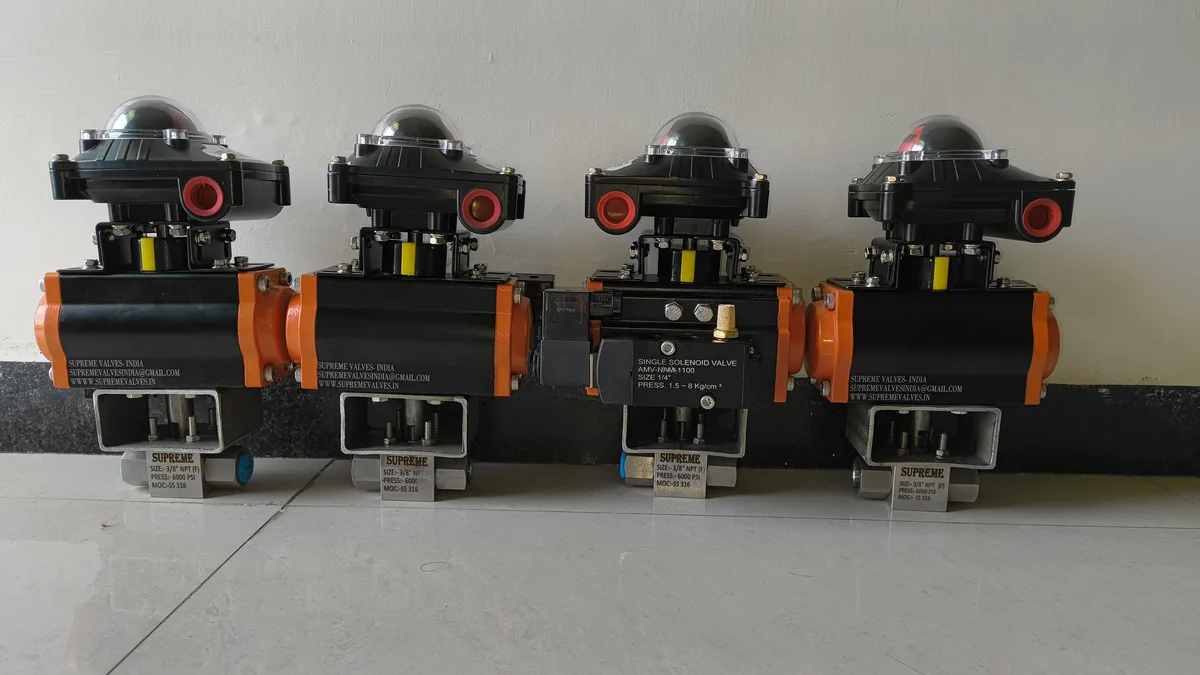
What is a 3-piece ball valve and what are its advantages?
A 3-piece ball valve has a body constructed from three pieces: two end caps and a center section containing the ball and seats. The primary advantage is that the valve can be disassembled for maintenance without removing it from the pipeline - simply unbolt the end caps to access internals. This makes 3-piece valves ideal for systems where shutdown is costly or difficult. They also provide better pressure containment than 2-piece designs and allow easier seat replacement.
What is the difference between full port and standard port 3-piece ball valves?
Full port (also called full bore) valves have an internal ball port diameter equal to the pipe bore, resulting in zero restriction to flow when fully open. Standard port (reduced bore) valves have a smaller ball port, creating a flow restriction equivalent to one pipe size smaller. Full port valves offer: lower pressure drop, ability to pass pigs for pipeline cleaning, full flow for tools/instruments, but at higher cost and slightly higher actuator torque requirements.
Why automate a 3-piece ball valve with a pneumatic actuator?
Pneumatic automation of 3-piece ball valves provides: rapid on/off switching (typically 0.5-2 seconds per 90-degree rotation); remote and automatic control for process integration; repeatable positioning for precise flow control; fail-safe operation with spring-return actuators; and compatibility with PLC and DCS control systems. Pneumatic actuation is preferred over electric for its speed, simplicity, intrinsic safety (no spark hazard), and lower cost in most industrial applications.
What maintenance is required for pneumatic 3-piece ball valves?
3-piece ball valves are designed for easy maintenance. The main maintenance items are: seat replacement (typically every 2-5 years depending on cycle count and media); stem seal inspection and replacement (check for leakage); actuator air supply filter replacement (quarterly); actuator connection检查 (verify air lines and fittings); and ball and body inspection if media is abrasive. Because the valve can be disassembled in-line, seat replacement can be done without a full system shutdown.
What is the typical service life of a pneumatic 3-piece ball valve?
With proper sizing and compatible media, a quality 3-piece ball valve with PTFE seats will typically provide 50,000-100,000 on/off cycles before seat replacement is needed. For clean, non-abrasive service at rated pressure, valve service life exceeds 10-15 years. Key factors affecting longevity: proper actuator sizing (undersized actuators cause rapid seat wear), avoiding excessive cycling, maintaining clean air supply, and matching seat material to process temperature and chemical compatibility.