
4.8/5 (82 reviews)
ISO 5211
India Made
Pneumatic Components
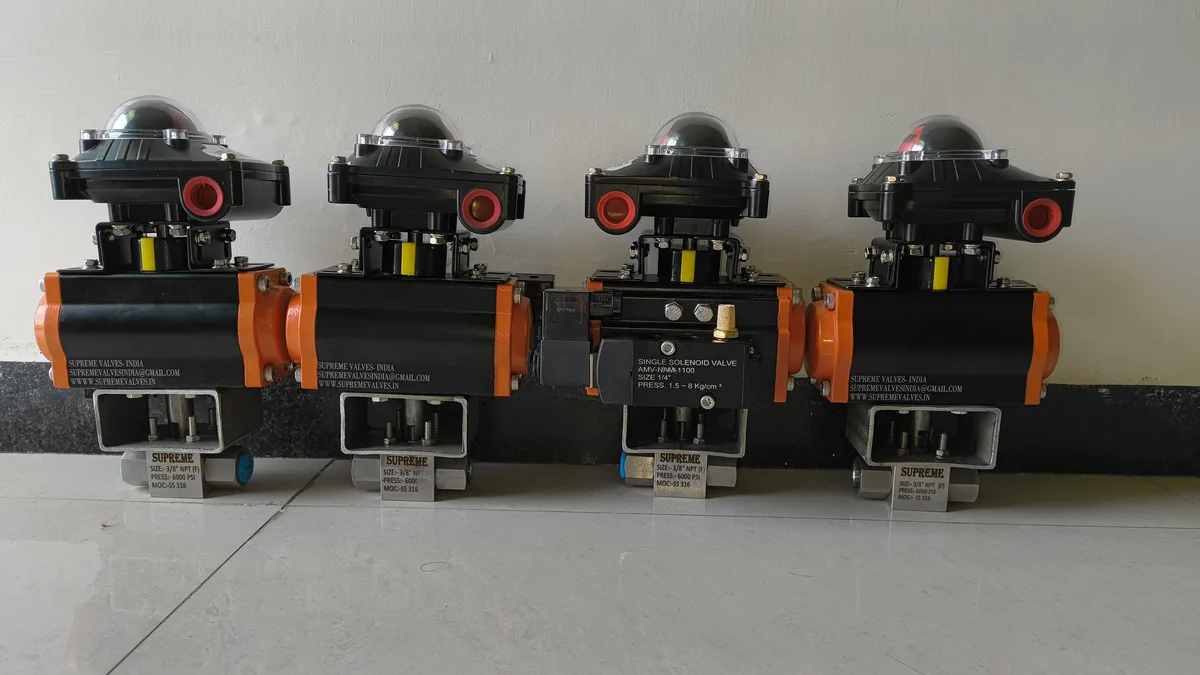
Rack & Pinion Double Acting Pneumatic Actuator
Rack and pinion double acting pneumatic actuator. ISO 5211 mounting. Torque 9 Nm to 4000 Nm. ATEX compliant. For ball valves, butterfly valves, and dampers.
Key Specifications
Category: Pneumatic Components
Brand: Supreme Valves India
Origin: Ahmedabad, Gujarat
Certification: ISO 9001:2015
In-stock: Standard sizes ship within 3-5 working days from Ahmedabad. Export packaging available.
Materials of Construction (MOC)
| Component | Material Specification |
|---|---|
| Body & Bonnet | Ductile Iron (ASTM A536 / EN-GJS-400-15) |
| Stem / Spindle | SS 410 / SS 420 |
| Seat / Trim | EPDM / NBR / Bronze |
Technical Specifications
| Parameter | Specification / Standard |
|---|---|
| Manufacturing / Design Standard | EN 1171 / AWWA C509 / BS 5163 |
| Testing Standard | API 598 / EN 12266-1 |
| Pressure Rating | PN16 / PN25 |