
Valve Selection for Seawater Applications: Complete Material Guide
Published April 4, 2026 | by Supreme Valves India | 12 min read
In This Guide
Why Seawater Corrosion is Different
Selecting valves for seawater service requires understanding the unique challenges that distinguish it from ordinary water or even brackish water applications. Seawater is a highly corrosive medium that attacks metals through multiple mechanisms simultaneously.
Key corrosion mechanisms in seawater include:
- Chloride attack: Seawater contains approximately 19,000-25,000 mg/L chloride ions, which aggressively attack stainless steels and carbon steel
- Velocity effects: High-velocity seawater causes erosion-corrosion and cavitation damage
- Biofouling: Marine organisms colonize surfaces, creating under-deposit corrosion and operational issues
- Temperature sensitivity: Corrosion rates increase significantly above 30°C
The wrong valve material in seawater can lead to premature failure, unplanned maintenance shutdowns, and safety risks. This guide will help you select the optimal material for your specific seawater application.
Seawater Valve Material Options Compared
Three primary material families are used for seawater valves, each with distinct advantages and limitations:
| Material | UNS/Grade | Max Temp | Chloride Limit | Cost |
|---|---|---|---|---|
| Nickel Aluminium Bronze | C95800 | ~60°C | Unlimited | Moderate |
| 254 SMO | S31254 | ~200°C | >50,000 ppm | High |
| Super Duplex 2507 | S32750 | ~250°C | >50,000 ppm | High |
Nickel Aluminium Bronze (NAB) - Industry Standard
NAB (ASTM B148 C95800) is the most widely used material for seawater valves and is considered the industry standard for marine and offshore applications worldwide.
Key Advantages of NAB
- Self-generating protective oxide film provides lifelong corrosion resistance
- Natural anti-biofouling properties reduce marine growth
- Excellent cavitation resistance for high-velocity applications
- High strength and durability in seawater environments
- Cost-effective compared to high-alloy stainless steels
Chemical Composition (ASTM B148 C95800)
- Copper (Cu): 79% min (remainder)
- Aluminium (Al): 8.5-9.5%
- Nickel (Ni): 4.0-5.0%
- Iron (Fe): 3.5-4.5%
- Manganese (Mn): 0.8-1.5%
Mechanical Properties
- Tensile Strength: 585 MPa (85 ksi) min
- Yield Strength: 240 MPa (35 ksi) min
- Elongation: 15% min
254 SMO - High-Performance Super Austenitic
254 SMO (UNS S31254) is a 6% molybdenum super austenitic stainless steel designed for high-chloride environments where standard stainless steels fail.
When to Choose 254 SMO
- Seawater temperature above 30°C
- High chloride content (>50,000 ppm)
- Thermal desalination (MSF/MED) applications
- When NAB is not acceptable for process reasons
- PREN requirement greater than 40
Key Properties
- PREN (Pitting Resistance Equivalent): 42-44
- Maximum Service Temperature: 200°C
- Excellent resistance to pitting and crevice corrosion
- Superior to 316L and even 904L in chloride environments
Duplex & Super Duplex - High Strength
Super Duplex 2507 (UNS S32750) combines the corrosion resistance of austenitic stainless steels with significantly higher strength - nearly double that of standard austenitic grades.
Super Duplex 2507 Specifications
- PREN: 40-45
- Tensile Strength: 800-1000 MPa
- Yield Strength: 550 MPa (vs 240 MPa for NAB)
- Maximum Service Temperature: 250°C
- Ideal for high-pressure RO systems (55-70 bar)
Super Duplex is increasingly specified for high-pressure seawater reverse osmosis (SWRO) desalination plants where both corrosion resistance and high strength are required to handle pressures exceeding 50 bar.
Recommended Valve Types for Seawater
Valve type selection depends on the specific seawater application and operational requirements:
Ball Valves
Full bore design for minimal pressure drop. NAB or SS316 trim. Suitable for ON/OFF service. Available in 2-way and 3-way configurations.
Best for: Seawater isolation, dosing lines
Butterfly Valves
Cost-effective for large diameters (DN300+). Wafer or lug design. NAB or Duplex disc with EPDM or NBR seat.
Best for: Intake/discharge lines, cooling water
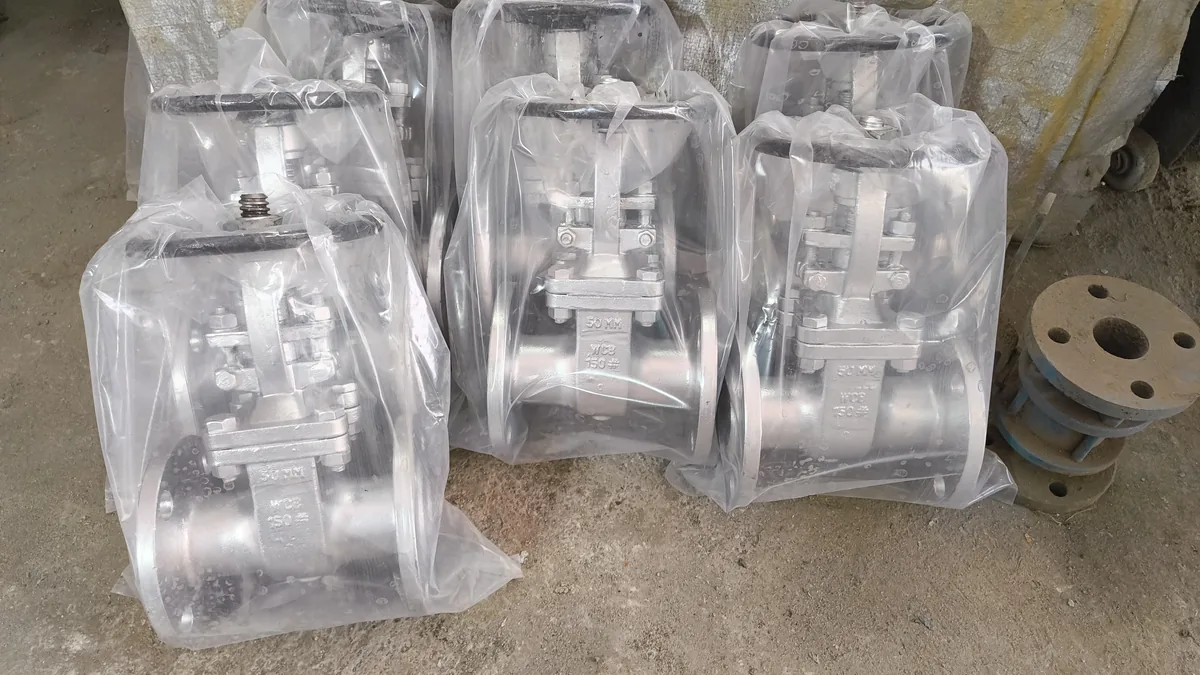
Gate Valves
OS&Y design for visual position indication. Full port for minimal pressure drop. NAB body with stainless trim.
Best for: Isolation where tight shut-off is critical
Check Valves
Swing check or dual plate design. NAB or Duplex body. Essential for preventing backflow in intake lines.
Best for: Pump protection, backflow prevention
Knife Gate Valves
For slurry or high-solids seawater (e.g., intake screens, backwash). Rising stem design. NAB or duplex body with knife-edge disc for cutting through debris.
Best for: Slurry service, high-solids seawater
Application-Specific Selection Guide
Frequently Asked Questions
What is the best valve material for seawater service?
Nickel Aluminium Bronze (NAB/C95800) is the most cost-effective choice for general seawater service. It offers excellent corrosion resistance, anti-biofouling properties, and cavitation resistance. For high-chloride seawater (>50,000 ppm Cl) or high-temperature applications, 254 SMO or Super Duplex 2507 provides superior pitting resistance (PREN >40).
What is NAB C95800 and why is it used for seawater?
NAB (Nickel Aluminium Bronze, ASTM B148 C95800) is a copper-based alloy containing 8.5-9.5% aluminium, 4-5% nickel, and 3.5-4.5% iron. It offers excellent seawater corrosion resistance, self-generating protective oxide film, anti-biofouling properties, and high strength. NAB is the industry standard for marine and seawater applications worldwide.
What is the difference between NAB, 254 SMO, and Duplex for seawater?
NAB (C95800) is a bronze alloy, cost-effective for general seawater up to 30°C. 254 SMO is a 6% Mo super austenitic stainless steel with excellent chloride resistance (PREN >40) for high-temperature or high-chloride water. Super Duplex 2507 combines chromium, molybdenum, and nitrogen for high strength and corrosion resistance. Selection depends on temperature, chloride content, and pressure requirements.
What valve types are recommended for seawater intake lines?
Seawater intake lines typically use large butterfly valves (DN300-DN1200) for ON/OFF control, knife gate valves for slurry service, and swing check valves to prevent backflow. Materials are usually NAB or Duplex for corrosion resistance. Wafer-style valves are preferred for lower installation costs in large diameter pipelines.
How does seawater temperature affect valve material selection?
Seawater temperature significantly impacts material performance. Below 30°C, NAB provides excellent service. Above 30°C, pitting corrosion risk increases - 254 SMO or Super Duplex is recommended. For thermal desalination (MSF/MED) at 90-120°C, only Super Duplex or Titanium provides adequate corrosion resistance.
What is PREN and why does it matter for seawater valves?
PREN (Pitting Resistance Equivalent Number) = %Cr + 3.3 x %Mo + 16 x %N. It measures a material's resistance to pitting in chloride environments. Minimum PREN 32 for seawater, PREN >40 for high-chloride or high-temperature seawater. NAB has excellent inherent seawater resistance despite not having a PREN rating due to its different corrosion mechanism.
Need Help Selecting Valves for Your Seawater Application?
Our engineering team can help you select the right material and valve type for your specific seawater service requirements.