
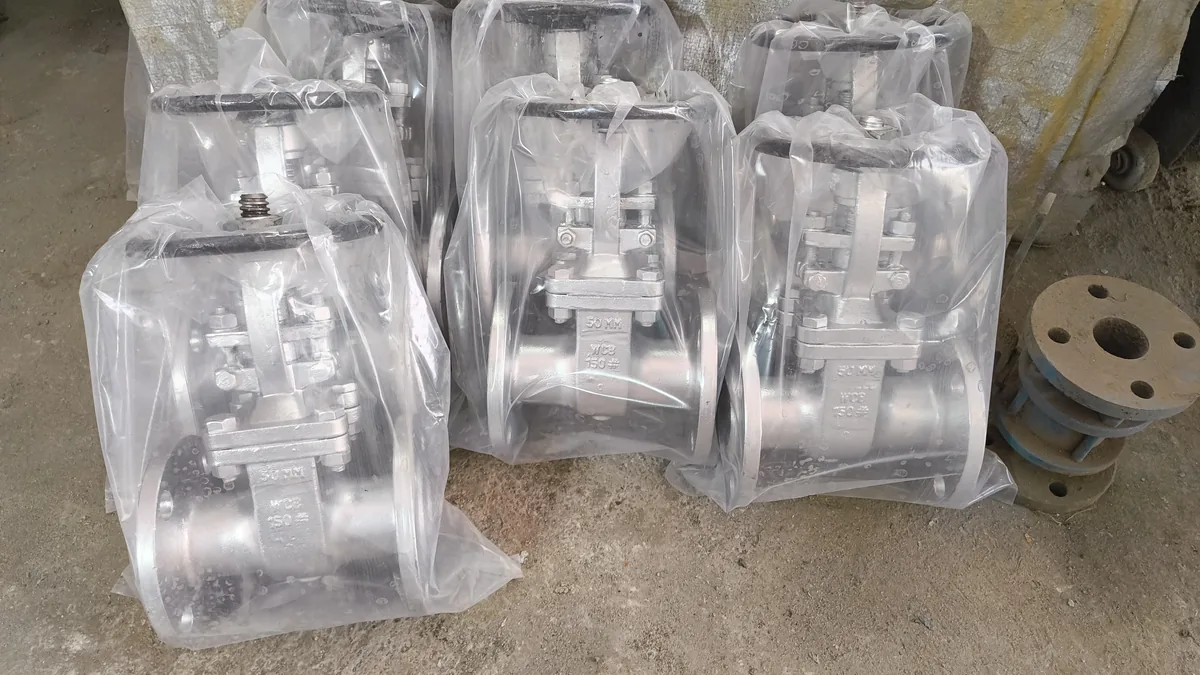
API Compliant Oil & Gas Valves
Heavy-duty industrial valves engineered for upstream extraction, midstream pipeline transportation, and downstream refining. Fully certified to API 600, API 6D, and API 602 standards, with sour gas configurations conforming to NACE MR0175/ISO 15156 specifications.
Hydrocarbon Sectors Served
Middle East & Global Delivery: SABER compliant for Saudi Arabia. Fully compatible with ARAMCO, ADNOC, KOC, PDO, and major EPC vendor specifications.
Valves by Hydrocarbon Process Area
Recommended Metallurgy for Hydrocarbon Plants
Carbon Steel (WCB / A105)
The universal standard for B2B hydrocarbon piping. Used for non-corrosive oils, natural gas, steam, and utilities within reasonable temperatures.
- Temperature: -29°C to 425°C
- WCB (Cast Body) / A105 (Forged Body)
- Complies with ASME B16.34 and API 600
Low Temp Steel (LCC / LF2)
Specifically designed for low-temperature applications such as midstream terminals, cold pipelines, and high latitude refineries.
- Temperature: down to -46°C
- LCC (Cast Body) / LF2 (Forged Body)
- Charpy V-Notch impact tested
Alloy Steel (WC6 / WC9)
Chrome-moly alloy steel offering excellent creep resistance and high strength. Standard for high-temperature superheated steam and cracking lines.
- Temperature: up to 593°C
- WC6 (1.25% Cr, 0.5% Mo)
- WC9 (2.25% Cr, 1% Mo)
Critical Valve Designs for Oil & Gas
API 6D Trunnion Ball
Designed for high-pressure pipeline isolation. Offers Double Block and Bleed (DBB) capability, through-conduit piggable bore, and fire-safe testing according to API 607.
API 600 Wedge Gate
The heavy-wall industrial workhorse gate valve for refining. Features dynamic flexible wedges, rising stems, bolted bonnets, and stellited seating surfaces for maximum isolation safety.
API 602 Compact Forged
High-pressure, small-bore gate, globe, and check valves. Crafted from forged steel (A105, LF2, F316) for refinery bypass lines, instrument manifolds, and chemical feed lines.
API 594 Dual-Plate Check
Compact, light-weight, non-slam return protection for pump discharge lines. Standard retainerless design prevents external casing leakage, minimizing emissions.
Frequently Asked Questions
What are the primary API standards for oil and gas valves?
The primary API standards include API 600 (Steel gate valves for oil refining), API 6D (Specification for pipeline ball, gate, and check valves), API 602 (Compact steel gate, globe, and check valves for 2 inches and smaller), and API 598 for pressure testing standards.
What does NACE MR0175 / ISO 15156 compliance mean for valves?
NACE MR0175 (ISO 15156) compliance specifies material requirements for valves exposed to H2S (Hydrogen Sulfide) in sour gas environments. It sets strict hardness limits and heat treatment standards to prevent Sulfide Stress Cracking (SSC) and Hydrogen-Induced Cracking (HIC) in carbon, alloy, and stainless steels.
What is the difference between API 600 and API 6D gate valves?
API 600 gate valves are heavy-duty wedge gate valves primarily used in downstream refineries and chemical processing plants for thermal isolation. API 6D gate valves are pipeline valves (often slab gate or expanding gate designs) engineered for midstream pipeline transportation, offering double-block-and-bleed (DBB) capabilities and through-conduit designs to allow line pigging.
Do you provide EN 10204 3.1 material test certificates?
Yes. Every valve supplied for oil and gas service is accompanied by comprehensive EN 10204 Type 3.1 Material Test Certificates (MTC), which provide chemical composition, mechanical properties, heat treatment details, NDT (radiography, magnetic particle, dye penetrant) inspection records, and pressure test logs matching API 598.
Need Valves for Your Oil & Gas Project?
Send us your valve specifications (MDS / Data Sheets). We provide material selection, third-party inspection (SGS, TUV, BV), and competitive prices for upstream, pipeline, and refinery projects.